Address: 119 Bd de la Résistance, Casablanca 20000
Opening hours :Mon - Fri: 9am-12.30pm and 2pm-6pm Sat: 9am-12pm
Email:Contact@bhadviser.ma
Phone:+212 661-468014
Address: 119 Bd de la Résistance, Casablanca 20000
Opening hours :Mon - Fri: 9am-12.30pm and 2pm-6pm Sat: 9am-12pm

Starting a business in Morocco has become a strategic option for international and U.S.-based entrepreneurs seeking access to Europe, Africa, and the Middle East from a single operational base. Morocco combines macroeconomic stability, progressive investment policies, and an increasingly sophisticated legal framework that supports both local and foreign investors.
This article explains how to start a business in Morocco, outlines the legal and administrative process, and highlights what foreign entrepreneurs should evaluate before deciding to invest in Morocco.
Morocco occupies a unique geopolitical and economic position. Located at the crossroads of Europe and Africa, it benefits from extensive trade agreements and modern infrastructure that supports international commerce.
From a business perspective, Morocco offers:
For U.S. investors in particular, Morocco stands out as one of the few African countries with a Free Trade Agreement with the United States, reducing customs barriers and improving market access.
Moroccan legislation allows both residents and non-residents to create and operate companies. There are no general restrictions on foreign ownership, and in most sectors, foreigners may hold 100% of the share capital.
This openness makes Morocco particularly attractive for:
Understanding how to start a business in Morocco as a foreigner begins with choosing the appropriate legal structure and complying with local formalities.
Selecting the correct legal form is a foundational decision that affects liability, governance, taxation, and future scalability.
The most commonly used structures include:
Each structure carries distinct compliance obligations, particularly regarding capital requirements and governance.
The company name must be verified and reserved with OMPIC. This step ensures that the name is legally available and not protected by trademark rights.
Required documents typically include:
Foreign-issued documents often require legalization and certified translation.
Company registration is centralized through the Centre Régional d’Investissement, which coordinates:
This centralized model significantly reduces administrative complexity compared to other jurisdictions.
Once incorporated, the company must register with:
Tax obligations depend on activity, turnover, and sector classification.
Businesses operating in Morocco are subject to several tax regimes, including:
Morocco also applies sector-specific regulations, particularly in finance, food processing, health-related activities, and regulated services. Due diligence at this stage is critical to avoid compliance issues after launch.
The timeframe to start a business in Morocco generally ranges between two and four weeks, assuming complete documentation and no sector-specific authorizations.
Costs vary depending on:
Foreign investors should budget not only for incorporation but also for ongoing compliance costs.
While Morocco is relatively accessible, foreign founders often face challenges such as:
Addressing these risks early is essential for long-term operational stability.
Before deciding to invest in Morocco, entrepreneurs should evaluate:
Morocco’s legal framework is stable, but it is also formalistic. Proper structuring at the outset often determines whether a business scales smoothly or encounters regulatory friction.
Understanding how to start a business in Morocco requires more than completing registration forms. It involves strategic planning, legal structuring, and ongoing regulatory compliance. For U.S. and international entrepreneurs, Morocco offers a compelling platform for regional expansion—provided the process is approached with precision and long-term vision.
Launching a business in Morocco is not merely an administrative exercise; it is a strategic decision that, when executed correctly, can position companies for sustained growth across multiple markets.
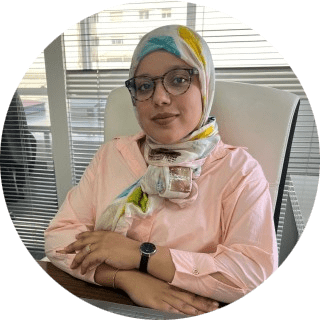
Writing by HANANE BELASKRI | Accountant , Legal and Tax Advisor , Judicial Expert
She is a Legal & Tax Advisor, Partner at BH Adviser, helping international companies enter, operate, and grow in Morocco and Africa through compliant business setup, due diligence, payroll, and tax advisory.