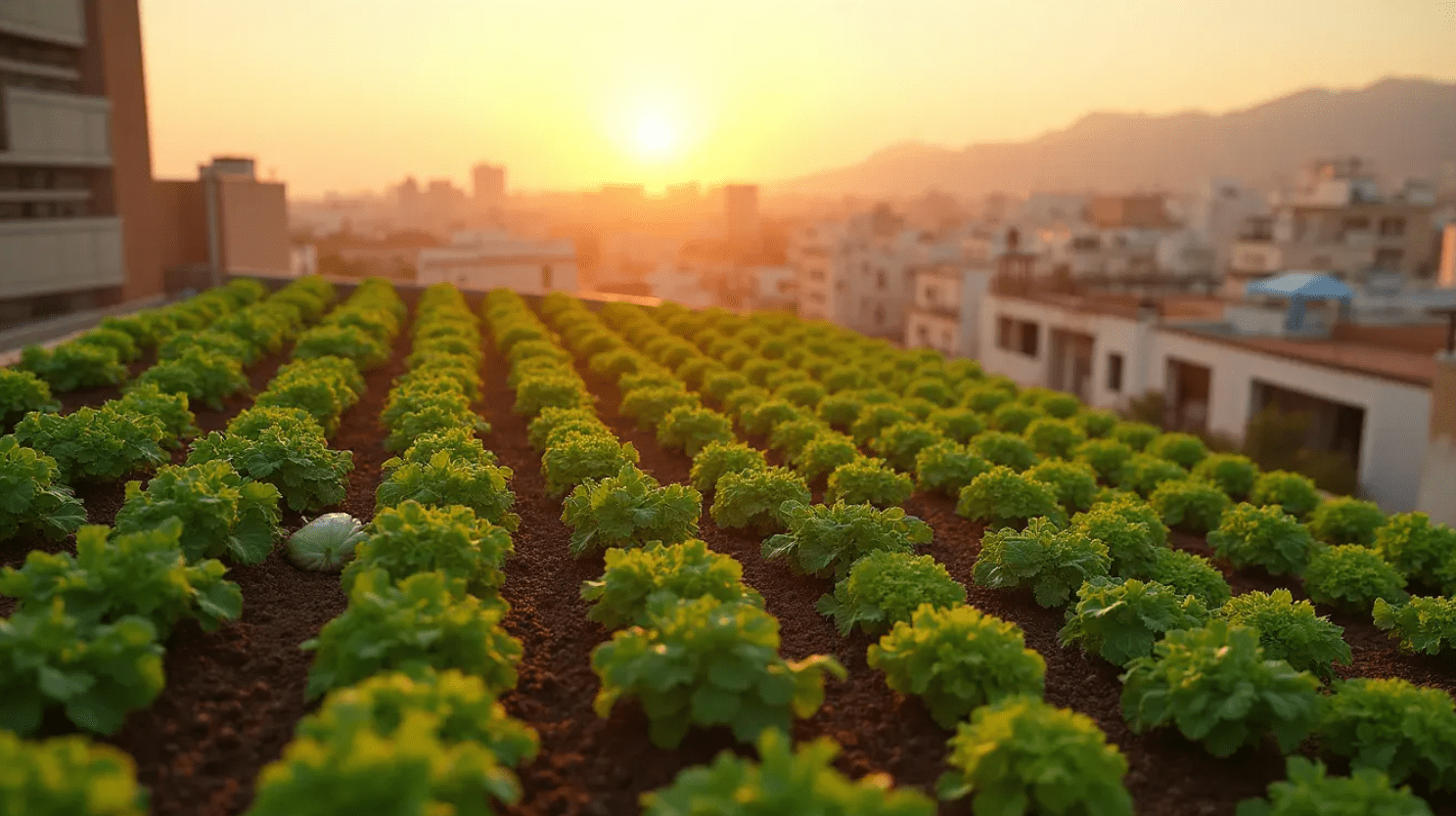
Morocco stands at a defining moment in its agricultural history. With more than 80% of national freshwater consumed by agriculture and a water deficit already exceeding 2 billion cubic meters annually, the country faces urgent pressure to transform how food is produced. Traditional farming — heavily dependent on rainfall, groundwater, and large surface areas — can no longer meet the rising food demand.
At the same time, Morocco is experiencing rapid urbanization, a growing middle class, and increasing demand for pesticide-free, high-quality produce available year-round.
This is why vertical farming, a method that grows crops in stacked layers using hydroponics or aeroponics, has become one of the most promising business opportunities in Morocco today.
From an investor and entrepreneur perspective:
It requires less land,
Uses up to 90% less water,
Produces consistent yields,
And fits perfectly within Morocco’s climate challenges.
This complete guide — written from the perspective of BH Adviser, a leading legal and business consultancy in Morocco — explains everything you need to know to start a successful vertical farm, from legal requirements to financial planning, technology selection, and regulatory compliance.
1. Understanding the Vertical Farming Opportunity in Morocco
1.1 What Is Vertical Farming?
Vertical farming is a controlled-environment agriculture (CEA) method where crops grow indoors in vertically stacked layers. Instead of soil, plants rely on:
Hydroponics → roots in a nutrient-rich water solution
Aeroponics → roots suspended in air and misted with nutrients
Aquaponics → hybrid system with fish + hydroponics
These techniques allow farmers to produce:
Higher yields per square meter
Year-round crops regardless of climate
Pesticide-free produce
Reliable, stable outputs even during drought years
1.2 Why Morocco Is an Ideal Market for Vertical Farming
Here are the structural reasons Morocco represents a strong market:
Severe water scarcity
Morocco is among the top 25 most water-stressed countries globally. Agriculture consumes 80% of freshwater, yet traditional irrigation loses enormous volumes due to evaporation and inefficiency.
Vertical farms reduce water consumption by 70–95%.
Urban population growth
Cities like Casablanca, Rabat, Marrakech, and Tangier demand:
Fresh produce
Short logistics chains
Higher hygiene standards
Indoor farms can supply supermarkets, restaurants, hotels, and households with same-day harvested produce.
Government incentives for sustainable agriculture
Morocco’s agricultural strategies — from Plan Maroc Vert to Génération Green — support climate-smart agriculture, water-saving technologies, and innovative production systems.
Growing investor interest in agri-tech
There is rising global funding for:
Controlled environment agriculture (CEA)
Hydroponics
Desert farming
Climate-adaptive food systems
Morocco is increasingly attractive to African, Gulf, European, and local investors.
2. Step-by-Step Guide: How to Start a Vertical Farm Business in Morocco
Below is the exact roadmap BH Adviser recommends for entrepreneurs and investors.
STEP 1 — Conduct Market Research and Select Your Crops
2.1 Understand Demand Before Choosing Your Crops
Most new farmers make the mistake of choosing crops based on personal preference instead of market data. Morocco’s markets vary significantly by region:
Casablanca → high demand for premium leafy greens
Marrakech → hotels & restaurants seeking fresh herbs and salads
Rabat → supermarkets and households prefer pesticide-free produce
Tangier → growing expatriate population with demand for specialty greens
2.2 Recommended crops for Morocco
High-potential crops include:
Lettuce (romaine, butterhead, crisp)
Spinach
Kale
Mint, basil, coriander, parsley
Microgreens
Strawberries
Arugula (roquette)
Baby greens for restaurants
Avoid crops that are energy-intensive or have low local demand unless you target export markets.
STEP 2 — Choose Between a Greenhouse and an Indoor Vertical Farm
2.3 Greenhouse vs. Indoor Vertical Farm: Which Is Better?
Criteria
Greenhouse
Indoor Vertical Farm
Sunlight
Natural
LED lighting required
Water use
Moderate savings
Up to 90% savings
Land requirement
Larger
Minimal, urban-friendly
CAPEX
Medium
High
OPEX
Lower energy
Higher energy
Climate control
Limited
Full control
Yield consistency
Good
Excellent
BH Adviser Recommendation
For Morocco:
Urban areas: indoor vertical farms
Semi-urban zones: hybrid greenhouse + hydroponics
Rural areas with solar potential: greenhouse hydroponics with solar integration
Pilot farms (small-scale test projects) are strongly recommended before large investment.
STEP 3 — Legal Requirements and Business Registration in Morocco
BH Adviser specializes in this part, as regulatory compliance is essential.
Costs vary depending on scale, technology, and location, but typical needs include:
Racking systems
LED grow lights
HVAC (temperature control)
Dehumidifiers
CO₂ control
Pumps, tanks, irrigation lines
Sensors (pH, EC, humidity, temperature)
Software for monitoring
Backup power systems
Construction or retrofitting space
A small urban vertical farm can start around: 300,000 – 1,200,000 MAD A medium warehouse operation: 2 – 6 million MAD A large commercial facility: 10 million MAD+
4.2 Operating Costs (OPEX)
Electricity (biggest expense)
Labor (1–5 technicians)
Seed & nutrient solution
Packaging
Water (low cost but needed)
4.3 Funding Sources in Morocco
Private investors
Bank loans (with feasibility study)
Government incentives for water-saving agriculture
International climate funds
Development agencies (USAID, GIZ, AFD, World Bank programs)
STEP 5 — Designing and Building the Vertical Farm
5.1 Choose Your Growing System
Hydroponics (NFT, DWC, ebb & flow)
Aeroponics
Hybrid systems
Hydroponics is generally the best fit for Morocco due to lower energy requirements.
5.2 Automation and Technology
Modern vertical farms use:
Sensor-based irrigation
Automated nutrient dosing
Climate control
AI-driven monitoring systems
Automation reduces labor cost and increases consistency.
5.3 Energy Strategy
Energy is the most significant OPEX, so Moroccan farms must optimize:
LED lighting efficiency
Renewable energy (solar)
Smart HVAC scheduling
Proper insulation to reduce cooling load
STEP 6 — Operations, Sales Channels & Scaling Your Farm
6.1 Hiring the Right Team
Typical roles include:
Farm manager
Hydroponics technician
Quality control
Sales & distribution staff
BH Adviser can also assist with:
Employment contracts
CNSS setup
Payroll compliance
6.2 Primary Sales Channels in Morocco
Supermarkets (Carrefour, Marjane, Aswak Assalam)
Hotels & restaurants
Direct-to-consumer (subscription boxes)
Online platforms
Export (for specialty herbs or greens)
6.3 Key Success Factors
Consistent quality
Fast delivery
Strong branding
Food safety compliance (very important)
Efficient energy and water management
Conclusion: Morocco Is Ready for Vertical Farming — Are You?
Vertical farming is no longer a futuristic idea — it is a strategic business opportunity for Morocco. The country’s water scarcity, growing urban demand, and agricultural modernization efforts create a perfect environment for new investors and entrepreneurs to enter the sector.
Success requires:
Solid market research
Legal compliance
Strong financial planning
Efficient technology
Expert guidance
BH Adviser supports investors and entrepreneurs at every stage:
Company formation
Licensing and ONSSA compliance
Business planning & feasibility
Funding support
Payroll & HR compliance
Long-term advisory
If you want to start a vertical farm business in Morocco, the time is now.
FAQ
1. How much water does vertical farming save in Morocco?
Between 70% and 95%, depending on the system.
2. What crops are most profitable?
Leafy greens, herbs, microgreens, and strawberries.
3. Is vertical farming expensive?
Startup costs range from 300,000 MAD to several million MAD depending on scale.
4. Do I need special permits?
Yes — ONSSA compliance, hygiene standards, and business registration are essential.
5. How long before the farm becomes profitable?
Typically 18–36 months, depending on scale and energy costs.
Book your free face-to-face consultation today
At BH Adviser, we guide investors through company setup, tax optimization, licensing, payroll, and industrial compliance so your project can start smoothly.