Address: 119 Bd de la Résistance, Casablanca 20000
Opening hours :Mon - Fri: 9am-12.30pm and 2pm-6pm Sat: 9am-12pm
Email:Contact@bhadviser.ma
Phone:+212 661-468014
Address: 119 Bd de la Résistance, Casablanca 20000
Opening hours :Mon - Fri: 9am-12.30pm and 2pm-6pm Sat: 9am-12pm

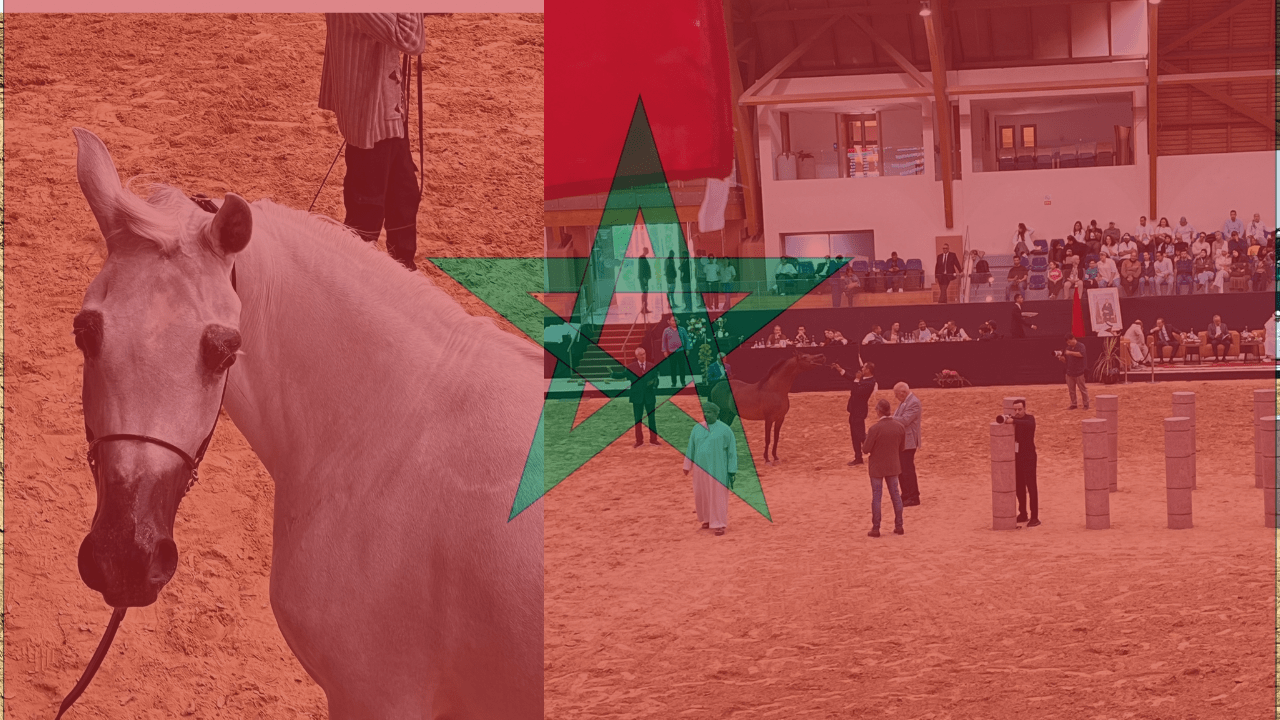
Thinking of breeding horses in Morocco? Discover niche selection, SOREC requirements, UAE competition insights, and the Salon du Cheval opportunity.
Horse breeding in Morocco is more than just a business venture—it’s an extension of a deep cultural heritage that has connected Moroccans to horses for centuries. As the Kingdom experiences a genuine renaissance in its equestrian sector, investors and horse enthusiasts are finding promising opportunities to build profitable ventures that combine passion with profit. In this guide, we’ll walk you step by step through how to launch a successful horse breeding business in Morocco.
Morocco possesses one of the world’s most prestigious equestrian traditions. The Barb and Arab-Barb breeds are considered national heritage, having been bred by local tribes for generations. The Arabian horse population in Morocco is estimated at around 13,000 head, while statistics from the Moroccan Arabian Stud Book indicate approximately 135 breeding stallions and 1,667 broodmares.
What distinguishes the Moroccan market is strong institutional support. Since 2003, the Royal Society for the Encouragement of the Horse (SOREC) has overseen and organized the sector, while purebred horses enjoy direct royal patronage. SOREC manages five national stud farms in Marrakesh, Meknes, Bouznika, Oujda, and El Jadida, providing comprehensive support to breeders throughout the horse’s life cycle.
The numbers reflect a vibrant industry: in 2024 alone, Morocco recorded 717 new foal registrations, alongside 175 imports and 46 exports. The Kingdom also organized 1,289 Arabian horse races across seven racetracks, with total prize money reaching 10.7 million euros.
Before purchasing your first horse, you need to clearly define your project’s direction. There are several main paths:
Racehorse Breeding: This path focuses on purebred Arabians or English Thoroughbreds destined for speed races. It’s a particularly active sector in Morocco given the large number of annual races and high prize values.
Show Horse Breeding: Targets competitions that evaluate the horse’s beauty, conformation, and movement. This requires careful bloodline selection and special attention to appearance.
Barb and Arab-Barb Breeding: A market strongly tied to Tbourida the most popular equestrian sport in Morocco as well as recreational riding, endurance, and trekking.
Boutique Breeding: A model focused on quality over quantity, where the breeder produces a limited number of foals per year (typically one to eight) from elite bloodlines. This is a suitable model for beginners who prefer starting small.
The key advice here: start small and specialize. Trying to cover every path at once scatters resources and weakens your chances of success.
Any serious horse breeding venture must comply with regulatory requirements:
You’ll also need to handle the general requirements for establishing any agricultural or commercial activity in Morocco, including legal registration and insurance.
Land and facilities represent a significant portion of the initial investment. Essential infrastructure includes:
Regions around Casablanca, El Jadida, and Meknes are particularly attractive due to their proximity to national stud farms, racetracks, and major events—making access to services and markets easier.
Selecting your “foundation herd” is the most critical decision in the project. The golden rule repeated by top breeders worldwide is: focus on the mares. The quality of broodmares with strong pedigrees is what makes the long-term difference.
When acquiring horses, pay attention to:
Horses can be acquired locally or through imports. The Royal Moroccan Association of Arabian Horse Breeders (ARMECPSA) has established economic incentives for breeders, including subsidies for importing frozen semen from world-class stallions, allowing access to top bloodlines without transporting the horse itself.
The success of a stud farm depends on team and expertise. You’ll need:
When building your strategy, it’s useful to look at the United Arab Emirates’ experience, which has transformed into a global hub for the Arabian horse industry.
The UAE renaissance effectively began in 2004 with Dubai’s first Arabian horse show, then expanded in 2009 when Abu Dhabi launched a major international show with prize money approaching 9.75 million dirhams. This momentum in prize values is what transformed horse breeding from a passion into a profitable enterprise. Today, more than 500 foals are born annually in the UAE, with world-renowned studs like Dubai Arabian Horse Stud producing global champions.
Lessons for the Moroccan breeder:
Morocco’s advantage here is that the Kingdom has been an early member of WAHO since 1980, with stud book records extending back nearly a century—giving Moroccan breeders international credibility to build upon.
One of Morocco’s greatest advantages as a destination for breeders is its rich calendar of events, which serve as direct channels for marketing, sales, and networking.
Salon du Cheval d’El Jadida: The Kingdom’s flagship equestrian event, organized annually since 2008 under royal patronage at the Mohammed VI Exhibition Park in El Jadida. The Salon is an ideal platform “to prospect markets, meet the competition, attract new clients, and demonstrate know-how.” It features a professional space bringing together every link in the equine value chain—from saddle-makers and equipment manufacturers to breeders, cooperatives, care centers, nutritionists, and startups. Its program includes major competitions such as the Champions’ Cup for Barb Horses, the Moroccan Arab Horse Breeders’ Cup, and the International Arabian Horse Show classified as a “Title Show”—the highest ranking awarded by the European Conference of Arab Horse Organizations (ECAHO).
International El Jadida Events: The city also hosts the El Jadida International Arabian Horse Show and the Moroccan Arab Horse Breeders’ Cup.
Arabian Horse Racing: Morocco is considered one of the world’s leading countries for organizing Arabian horse racing, with an international race meeting in Casablanca featuring six international flat races.
Other Events: Including Rabat Horse Week, the El Jadida International Horse Show, and the Morocco Royal Tour.
These events aren’t just spectacles; they’re real markets and networking platforms that allow small studs to consider international expansion at a much lower cost than traditional marketing tools.
Horse breeding is a long-term venture. A mare’s gestation period is approximately 11 months, and a foal needs years before it’s ready for racing, showing, or sale at a high value. Investors should approach the project with a vision spanning five to ten years.
Key cost elements include: foundation herd purchase, land and infrastructure, feed, veterinary care, labor, competition entry fees, and insurance. Revenue sources come from foal sales, race and competition prizes, stud fees from breeding stallions, and sometimes complementary activities like riding lessons or equestrian tourism.
Morocco offers an ideal environment to launch a horse breeding business: a deep heritage, strong institutional and royal support, developed infrastructure, an international events network, and membership in global organizations. While competition is strong—particularly from markets like the UAE—Moroccan breeders have genuine strengths to build on.
Success in this sector doesn’t come from rushing in but from careful planning: start small, specialize in one path, invest in broodmares with excellent pedigrees, comply with official documentation, and leverage the Salon du Cheval d’El Jadida and other events as platforms for marketing and learning. Above all, be patient—horses, as breeders often say, reward those who wait for them.
Disclaimer: This article is for informational and educational purposes only and does not constitute investment or legal advice. It’s recommended to contact SOREC and the Royal Moroccan Association of Arabian Horse Breeders (ARMECPSA), as well as a legal advisor, for the latest regulatory information before launching your project.
Writing by HANANE BELASKRI | Accountant , Legal and Tax Advisor , Judicial Expert , 300+ companies registered
She is a Legal & Tax Advisor, Partner at BH Adviser, helping international companies enter, operate, and grow in Morocco and Africa through compliant business setup, due diligence, payroll, and tax advisory.