Address: 119 Bd de la Résistance, Casablanca 20000
Opening hours :Mon - Fri: 9am-12.30pm and 2pm-6pm Sat: 9am-12pm
Email:Contact@bhadviser.ma
Phone:+212 661-468014
Address: 119 Bd de la Résistance, Casablanca 20000
Opening hours :Mon - Fri: 9am-12.30pm and 2pm-6pm Sat: 9am-12pm

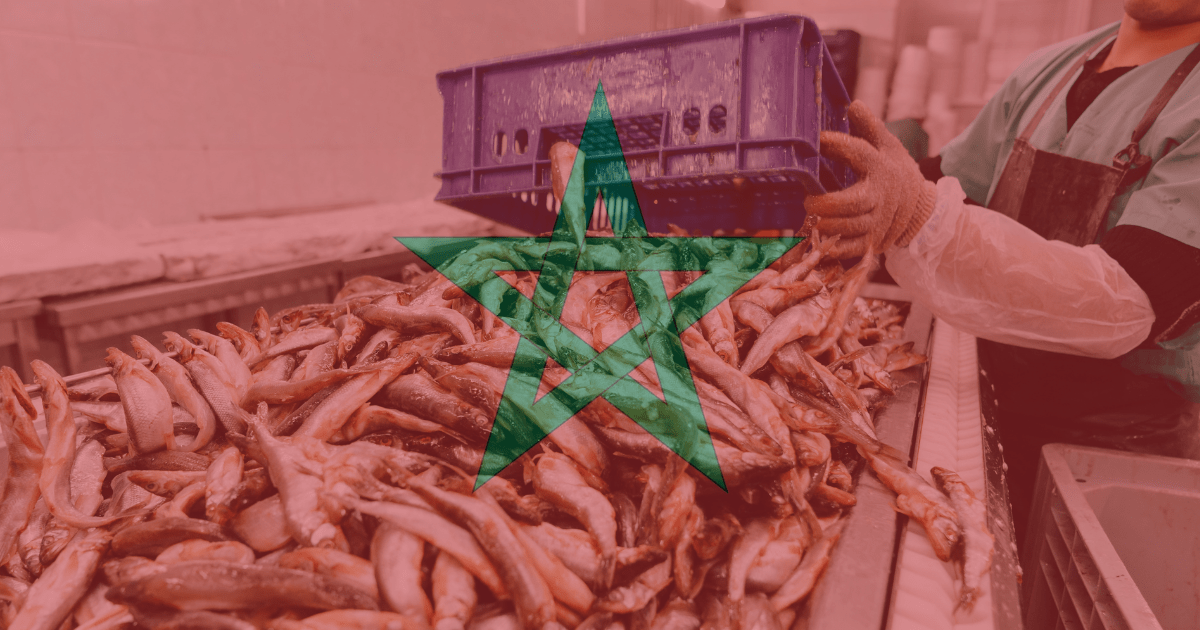
Morocco fish business investment guide — Agadir, Laayoune, and Dakhla seafood processing hubs
- Morocco’s fish industry exports = ~MAD 31 billion ($3.2 billion USD) with 847,000 tonnes shipped, growing 7% per year for over a decade. The sector represents 7% of total Moroccan exports and 39% of agri-food exports.
- 518 processing units currently operate in Morocco, employing 126,000+ direct workers.
- National production hit 1.42 million tonnes in 2024, generating MAD 16.3 billion in landed value.
- Investors in fish-industry free zones (Agadir Haliopolis, Dakhla Atlantic) get 0% corporate tax for 5 years, then 20% — vs. the standard 20–35% rate.
- Moroccan seafood enters the EU and USA at 0% tariff under existing trade agreements.
- Realistic ROI target: 18–30% for a well-run, export-focused canning or freezing operation; payback ~4–6 years.
- The government (Hassan II Fund + Investment Charter 2023) can subsidize up to 30% of total project cost for qualifying large projects.
- Government 2030 target: 300,000 tonnes of aquaculture + 450,000 new jobs. Aquaculture is now Morocco’s most subsidy-friendly fish-industry segment.
💼 Considering an investment? Book a 30-minute consultation call to evaluate your project’s fit, capex range, and free-zone eligibility.
If you are evaluating where to place capital in the global seafood industry, Morocco fish business investment offers a combination of advantages that no other country can match:
In simpler terms: low cost in, premium-market access out, and a government that actively pays you to invest. This is why a Moroccan canning company can sell to Spain, France, and Germany at prices Asian competitors cannot match — and still produce gross margins north of 30%.
| Metric | Value | Year |
|---|---|---|
| Total seafood export turnover | ~MAD 31 billion ($3.2 billion USD) | 2023 |
| Export volume | 847,000 tonnes | 2023 |
| Share of total Moroccan exports | 7% | 2023 |
| Share of agri-food exports | 39% | 2023 |
| National production (landed) | 1.42 million tonnes, MAD 16.3B | 2024 |
| Coastal & artisanal landings | 1.13M tonnes, MAD 10.11B (–15% volume, –4% value) | 2025 |
| Processing units in operation | 518 (freezing, canning, semi-preserve, valorization) | 2024 |
| Direct industry jobs | 126,000+ | 2024 |
| Export destinations | 138+ countries | 2024 |
| Canned sardine volume (world #1) | 152,137 tonnes | 2022 |
| Octopus exports (world #1) | ~$612 million USD | 2023 |
| Aquaculture projects supported | 450 (123 social) | 2025 |
| Long-term aquaculture target | 300,000 tonnes + 450,000 jobs by 2030 | Halieutis 2030 |
Sources: Office National des Pêches (ONP), Haut-Commissariat au Plan, Secretary of State for Maritime Fisheries (Zakia Driouch, 2024–2025 statements), UN COMTRADE, Statista, FAO GLOBEFISH.
⚠️ Honest 2025 note for due diligence: 2025 saw landings fall 15% and value fall 4% in coastal & artisanal fisheries due to pelagic stock pressure and seasonal variation. This is a normal cyclical dip — not a structural decline — and it strengthens the long-term investment thesis: when wild catch tightens, value-add processing and aquaculture margins widen. The government is responding by accelerating the 450-project aquaculture pipeline.
Investors care about why a market keeps growing. Three forces are pulling demand toward Moroccan seafood right now:
1. The mercury-free, omega-3 megatrend. Consumers and the U.S. FDA are explicitly steering people away from large predatory fish (tuna, swordfish, shark) and toward small fish (sardines, anchovies, mackerel) — which are exactly Morocco’s specialty. The FDA’s 2021 dietary advice lists sardines and anchovies among the “Best Choices” for pregnant women and children.
2. The tinned-fish renaissance. Premium canned fish has moved from “cheap pantry staple” to “trendy gourmet food” in the U.S., UK, and Western Europe. Brands are launching $8–$15 cans of sardines in olive oil with lemon, chili, smoked paprika — all sourced from Morocco.
3. Aquaculture demand for fishmeal & fish oil. Norwegian salmon farms, Chilean salmon farms, and Asian shrimp producers depend on fishmeal. Morocco is one of the most consistent global suppliers.
These are not cyclical. These are 10–20-year tailwinds.
Not every fish business is equally profitable. Here is where the margin actually sits in 2026:
| Business Model | Typical Gross Margin | Capital Intensity | Investor Profile |
|---|---|---|---|
| Raw fishing fleet | 8–15% | Very high | Industrial groups only |
| Freezing & cold storage | 15–25% | Medium-High | Logistics-oriented |
| Canning & processing | 25–40% | Medium | Sweet spot for new investors |
| Private-label canning for export | 30–45% | Medium | Highest ROI niche |
| Fishmeal & fish oil | 20–30% | High | Industrial scale |
| Aquaculture (oysters, sea bass) | 25–35% | Medium-High | Long horizon (3–5 yr) |
| Sourcing/trading (no plant) | 5–15% net | Low | Service business |
The investor sweet spot in 2026 is canning and private-label canning for export. Why? Vertical integration is already in place (raw material is local and cheap), the tariff advantage is fully usable, and demand from U.S./EU premium brands looking for white-label production is outpacing supply.
This is the single biggest reason serious investors pick Morocco over other African seafood hubs. The numbers are unusually generous.
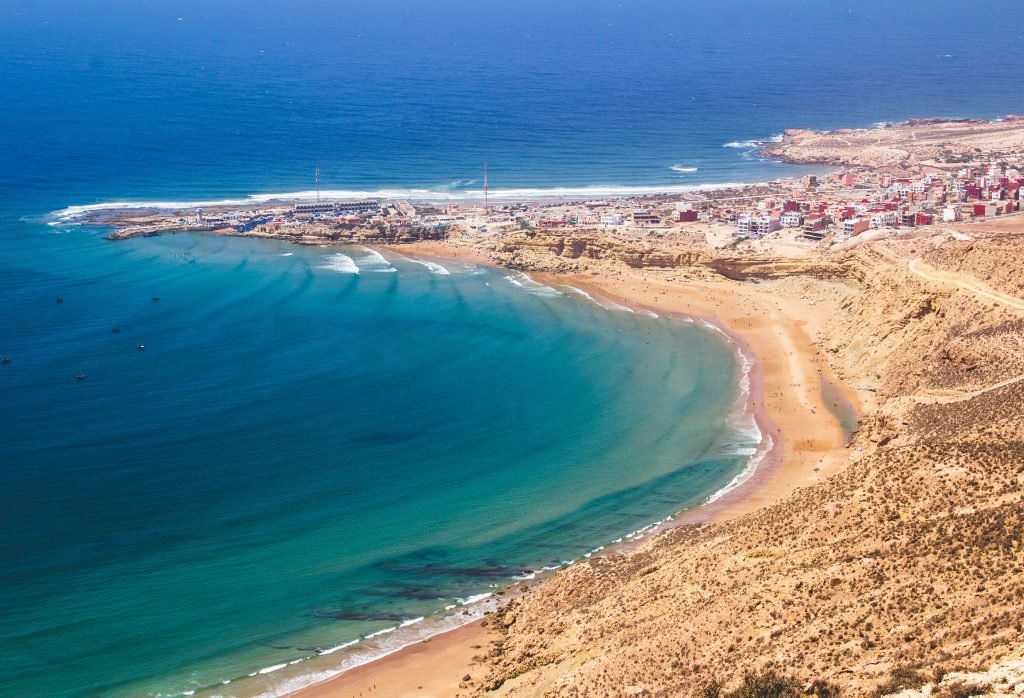
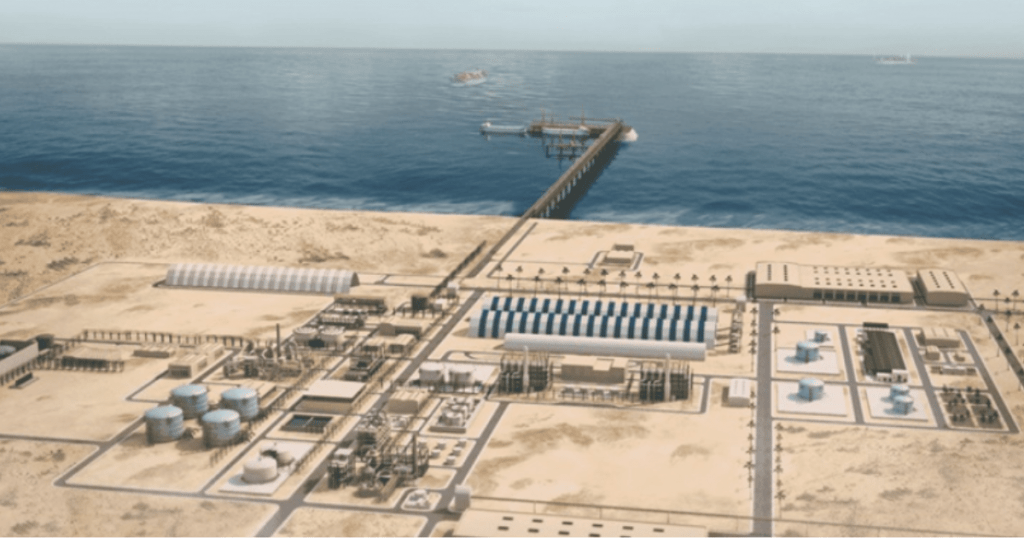
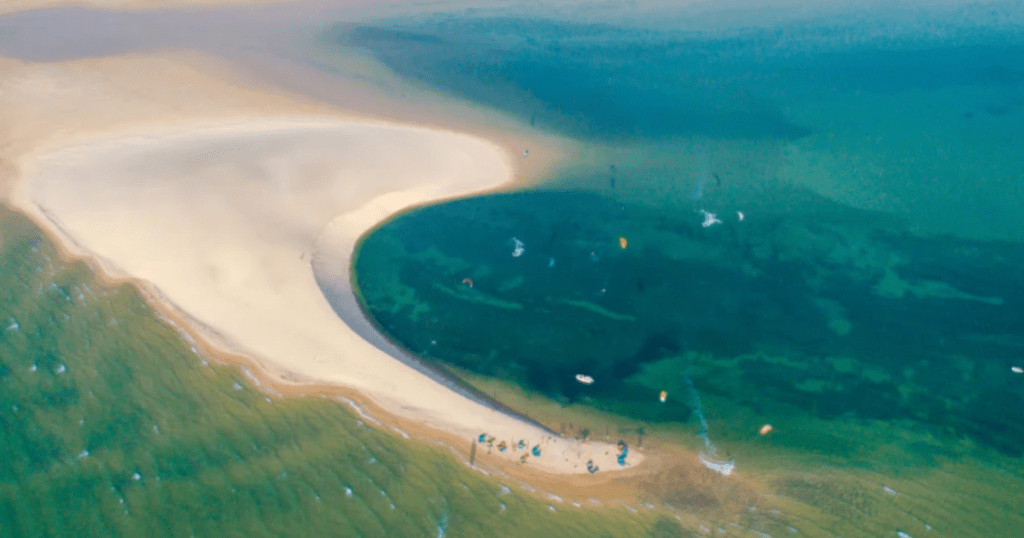
Morocco has 12+ designated IAZs. Two are directly relevant to the fish business:
Companies established in these IAZs benefit from:
| Benefit | Detail |
|---|---|
| Corporate income tax (CIT) | 0% for the first 5 years, then 20% |
| Business tax | Exempt for 15 years |
| VAT | 0% on transactions inside the zone |
| Customs duties | 0% on imported equipment and raw materials |
| Foreign exchange controls | None — full currency repatriation |
| Employee income tax | Capped at 20% for up to 10 years |
| Domestic market sales | Up to 15% of production can be sold inside Morocco |
If your project is large enough, the Moroccan government can contribute up to 30% of your total investment cost via the Industrial Development and Investment Fund and the Hassan II Fund for Economic and Social Development.
Translation: on a $10M canning plant, you may be eligible for up to $3M in state co-investment if your project creates jobs, brings export revenue, and aligns with the Halieutis Plan.
Industrial companies operating outside IAZs can still get 5 years of full corporate tax exemption for export activities under standard Moroccan tax law.
💼 The right zone choice is worth $1M+ over 10 years. Picking between Haliopolis, Dakhla Atlantic, or a non-zone industrial site depends on your product mix, target markets, and labor strategy. Book a consultation call to map this out for your specific case.
This is the section most investor guides skip. Here are the realistic numbers based on recent public projects.
| Project Type | Capex Range | Capacity | Reference |
|---|---|---|---|
| Small artisanal canning unit | $500K – $1.5M | 5–15 tons/day | Family-owned model |
| Mid-size canning plant | $3M – $8M | 50–150 tons/day | Typical Agadir model |
| Large industrial canner | $15M – $30M | 300–500 tons/day | Dakhla 2018: $25M = 425 tons/day, 355M cans/year |
| Freezing & cold storage unit | $2M – $6M | 20–50 tons/day | Octopus/sardine freezer |
| Aquaculture (oysters, sea bass) | $1M – $4M | Site-dependent | Halieutis-supported |
| Fishmeal & fish oil plant | $10M – $25M | 100–200 tons/day raw | Industrial scale |
Reference benchmark: Morocco’s 2018 investment of MAD 1B (~$100M) built 4 canning plants totaling 425 tons/day and 355M cans/year capacity = roughly $25M per fully integrated plant.
For an export-focused canning or freezing operation, well-run:
It is not the plant. It is the EU compliance setup: EU establishment number, HACCP system, BRC/IFS certification, traceability software, EUR.1 certificate process, and continuous EU veterinary inspections. Budget $150K–$400K in the first 18 months for compliance, consulting, and certification. Without this, you cannot ship to Europe — which means you cannot capture the tariff advantage.
💼 Want a custom capex and ROI model for your project size and product mix? Book a consultation call and we’ll build the financial projection together.
Produce canned sardines/anchovies/mackerel under the brand names of US/EU retailers and gourmet brands.
Source from Atlantic ports, freeze, grade, and ship to Spain/Japan/Korea.
Build your own boutique brand (think Spanish Espinaler, Portuguese Conservas Pinhais style).
The Halieutis Plan strongly subsidizes marine aquaculture. 310 projects already supported.
Targeting Norwegian salmon farms and human-grade omega-3 supplements.
Time to first export shipment: 18–24 months. Time to full capacity utilization: 30–42 months.
Investor rule of thumb:
This is the single biggest external advantage Morocco offers fish-business investors.
| Market | Agreement | Tariff |
|---|---|---|
| 🇪🇺 European Union | EU–Morocco Association Agreement (2000) | 0% for most seafood |
| 🇨🇭 EFTA (Switzerland, Norway, Iceland, Liechtenstein) | EFTA–Morocco FTA (1999) | 0% |
| 🇺🇸 United States | US–Morocco FTA (2006) | 0% or near-zero |
| Africa (54 countries) | AfCFTA (ratified by Morocco 2022) | Progressive 0% |
| 🇸🇦 Middle East (Egypt, Jordan, Tunisia, Lebanon, Palestine) | Agadir Agreement | 0% |
| 🇹🇷 Turkey | Morocco–Turkey FTA | Reduced |
| 🇦🇪 UAE | Morocco–UAE FTA | Reduced |
A Thai or Chinese competitor exporting canned sardines to the EU pays the EU’s MFN tariff. You pay 0%. Over a 10-year period, on $20M annual exports, the tariff differential alone is worth millions in cumulative gross margin.
⚠️ Note for due diligence: In 2024, the European Court of Justice ruled that certain bilateral EU-Morocco agreements (including the Fisheries Partnership Agreement protocol) could not include Western Sahara waters. The original EU-Morocco Association Agreement (which governs seafood tariffs) remains in force. A good legal advisor will help you structure operations to avoid any ambiguity.
Honest risk mapping — because this matters more than upside when you are writing a real check.
| Risk | Likelihood | Mitigation |
|---|---|---|
| Fish stock depletion / climate change | Medium | Diversify species, work with sustainable certified suppliers, follow Halieutis quotas |
| Raw material price volatility (sardine, octopus) | High | Lock long-term contracts with seiners; vertically integrate; hedge with frozen inventory |
| EU compliance failure | Medium | Hire a Moroccan QA/QC firm experienced with BRC/IFS from Day 1 |
| Currency risk (MAD vs USD/EUR) | Medium | Most invoicing in EUR/USD; natural hedge for exporters |
| Western Sahara legal complications | Low–Medium | Structure operations in undisputed zones; clear documentation; specialized legal advisor |
| Bureaucracy / delays | Medium | Use a CRI (Regional Investment Center) facilitator; budget 3–6 months extra |
| Geopolitical (regional tensions) | Low | Morocco is the most politically stable country in North Africa |
This consultation is most useful if you:
Free, no obligation. We’ll either tell you it’s a strong fit, or we’ll save you 18 months of research.
A: Morocco’s seafood exports reached approximately MAD 31 billion (~$3.2 billion USD) in 2023, with 847,000 tonnes shipped. The sector represents 7% of total Moroccan exports and 39% of agri-food exports. National production hit 1.42 million tonnes in 2024 with MAD 16.3 billion in landed value. The industry includes 518 processing units and 126,000+ direct jobs. Coastal & artisanal landings declined 15% in 2025 due to pelagic stock pressure, but value-add segments (processing, aquaculture) continue to grow.
A: Realistic minimums range from $500K for a small artisanal canning unit to $30M for a large industrial plant. The sweet spot for new investors is $3–8M for a mid-size canning operation in Agadir Haliopolis or Dakhla Atlantic.
A: Yes. There are no foreign ownership restrictions on fish-industry investments. Foreign investors can also repatriate dividends, capital gains, and proceeds tax-free without amount or duration limits.
A: Inside an Industrial Acceleration Zone (Agadir Haliopolis, Dakhla Atlantic): 0% for the first 5 years, then 20%. Outside the zones: standard 20–35% rate, but export businesses can still claim 5 years of CIT exemption under ordinary law.
A: Yes. Under the 2023 Investment Charter, the government can contribute up to 30% of total project cost for qualifying large projects via the Industrial Development and Investment Fund and the Hassan II Fund. The Halieutis Plan also provides sector-specific subsidies for aquaculture.
A: Realistically 18–24 months from incorporation to first EU-bound shipment, mostly limited by the EU establishment number approval process and BRC/IFS certification timeline.
A: A well-run, export-focused canning operation typically delivers 18–30% net ROI annually, with a 4–6 year payback period, after capturing free-zone tax exemptions and EU duty-free access.
Agadir Haliopolis is in the established industrial north — mature ecosystem, higher costs, easier logistics to Europe. Dakhla Atlantic is the southern frontier — cheaper land, heavier state investment, lower costs but newer infrastructure.
A: No. You can own 100% of the company. But a local partner or experienced local director substantially shortens the regulatory timeline and helps with hiring, supplier relationships, and navigating the CRI process.
A: Morocco’s national fisheries strategy launched in 2009 by King Mohammed VI. It is the structural reason the industry has grown ~7% per year. Investors aligned with the plan’s priorities (aquaculture, processing, value-add) often receive favored treatment for subsidies and permits.
A: The Halieutis International Fair in Agadir (ait melloul) is the single best place — 523 exhibitors from 54 countries at the 2025 edition. Or work with a sourcing/advisory firm with established networks across Agadir, Laâyoune, and Dakhla.
A: Morocco enforces catch quotas, biological rest periods, and marine protected areas. The Halieutis Plan and Blue Belt Initiative are among the strongest sustainability frameworks in Africa. Risks exist (climate change, overfishing pressure) but t
You have read the data. The Morocco fish business is a $3.2B industry growing 7% per year, with zero EU tariffs, 5-year tax holidays, up to 30% state co-investment, and ROI benchmarks of 18–30%.
But the difference between a 20% IRR and a failed project is not the country. It is the structure: the right zone, the right product, the right partners, the right compliance timeline.
We are a licensed Moroccan firm (lawyer/accountant/cabinet) — not a consultant or middleman. This means every document we file is signed and submitted under our own professional license, fully compliant with Moroccan regulatory authorities. You get one team, one contract, one point of contact — handling the entire setup of your Moroccan fish business from incorporation to first export shipment.
We handle all 10 of these services in-house:
🏢 1. Company Formation
📜 2. Legal Paperwork & Contracts
💼 3. Tax Registration & Ongoing Filings
🐟 4. Industry-Specific Licensing
🏭 5. Free-Zone Application
🇪🇺 6. EU Establishment Number & Export Compliance
📊 7. Accounting & Bookkeeping
🏦 8. Corporate Banking Setup
🛂 9. Work Permits & Visas for Foreign Staff
🤝 10. Sourcing & Operational Partners
The cost of doing this yourself is not the legal fees — it is the time and the structural mistakes:
Our clients typically save 6–12 months of setup time and avoid the most common and most expensive mistake: incorporating before securing free-zone status.
Or email Contact@bhadviser.ma with “Morocco Fish Investment” in the subject line and we’ll get back to you within 24 hours.

Writing by HANANE BELASKRI | Accountant , Legal and Tax Advisor , Judicial Expert , 300+ companies registered
She is a Legal & Tax Advisor, Partner at BH Adviser, helping international companies enter, operate, and grow in Morocco and Africa through compliant business setup, due diligence, payroll, and tax advisory.